
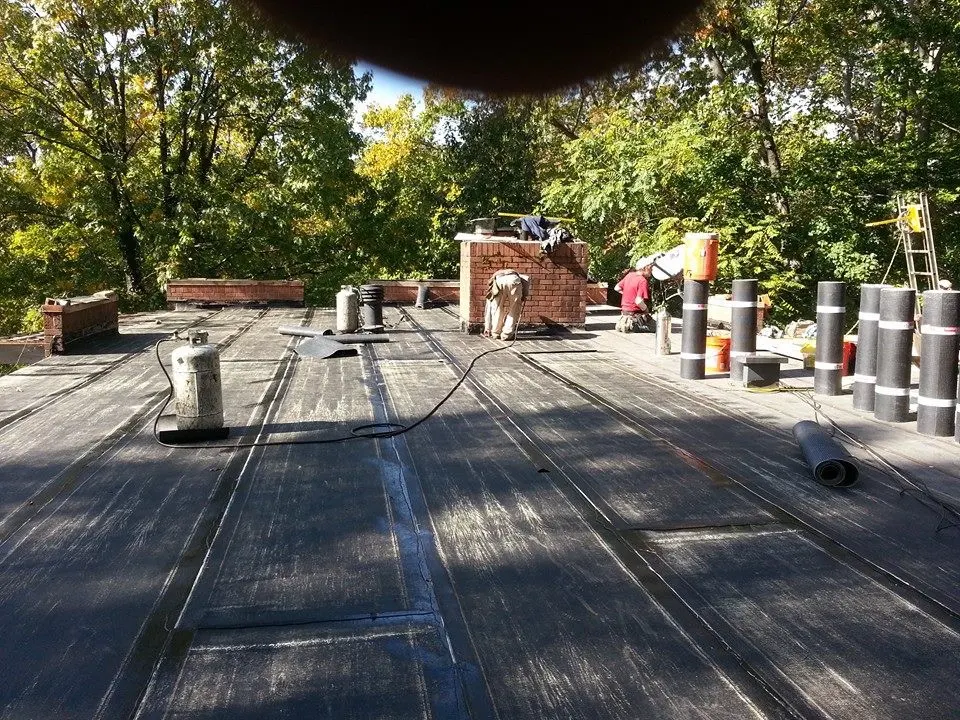
New Flat Roof Installation in Hyattsville, MD
A flat roof is only as good as what's under it and how the water leaves it. Raymond builds the deck, the layers, the flashing, and the drainage right.
A Flat Roof Is Only as Good as What's Under It
The membrane everyone sees is the last layer of a system. What decides whether a new flat roof lasts is the deck beneath it, the base sheet over the deck, the way every wall and penetration is flashed, how the water leaves the roof, and the reflective coat on top. Skip or rush any one of those and the new roof leaks years before it should.
Raymond installs new flat roofs on rowhouses, homes, and low-slope buildings across Hyattsville, Washington DC, Prince George's and Montgomery County. He starts with a solid deck, lays a proper base sheet, applies the cap sheet — modified bitumen or hot asphalt built-up, whichever fits the building — flashes every parapet, chimney, and skylight curb, makes sure water reaches the scuppers, and finishes with a reflective silver coat that takes the heat off a DC summer roof.
Which system fits which building? For most rowhouses and homes, modified bitumen — a reinforced cap sheet, torch-applied or cold-adhered over a base sheet — is the practical, durable choice. For larger low-slope roofs, older commercial and apartment buildings, and roofs that take foot traffic or hold equipment, a traditional hot asphalt built-up roof with multiple plies still makes good sense. Raymond explains the trade-offs in plain language and recommends the one that fits your building, not the one that's easiest to sell.
Get an Honest Quote
How Raymond Handles It
Estimate and System Choice
Raymond inspects the building, the deck, and the drainage, then recommends modified bitumen or hot asphalt built-up — whichever genuinely fits the roof and explains why.
Deck Prep
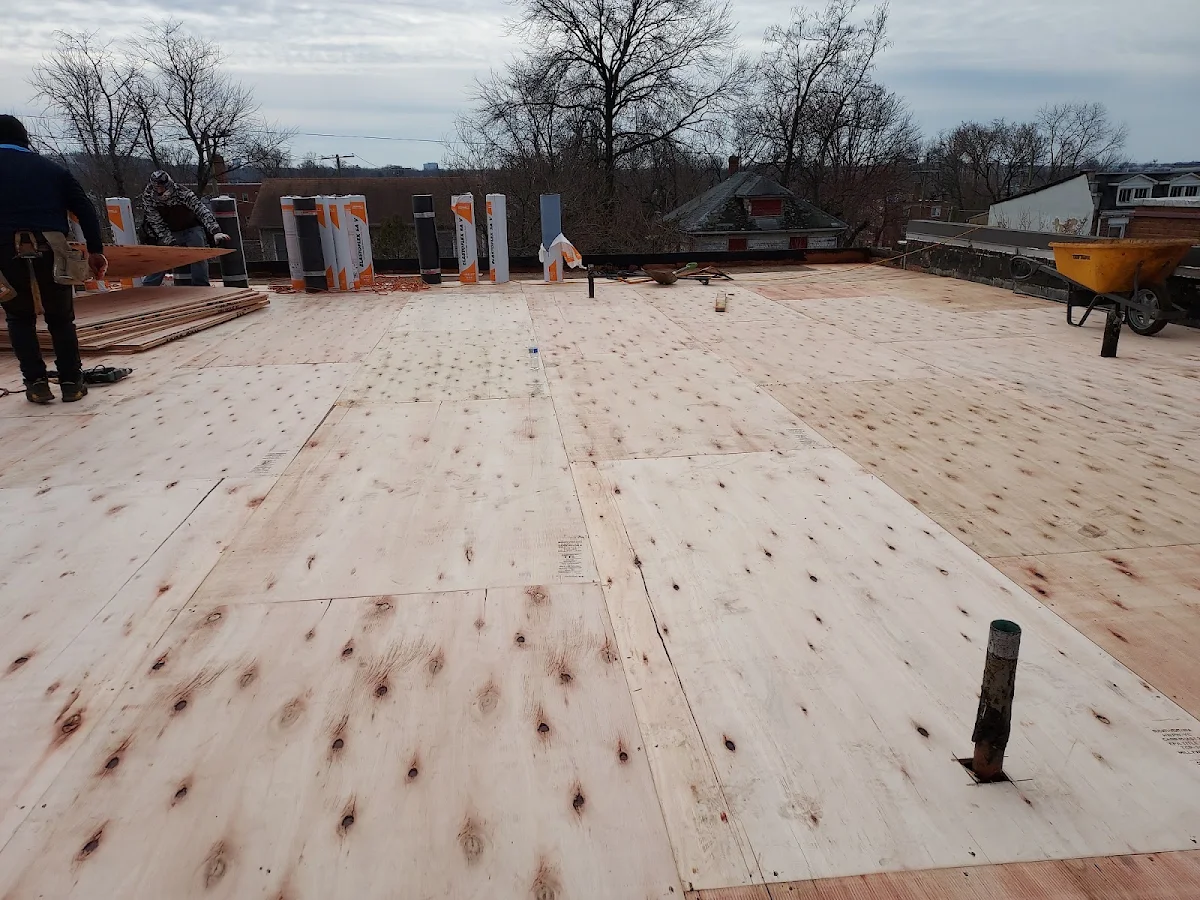
A new flat roof starts with a solid deck. Raymond repairs or replaces any soft or rotted wood so the system above it has a sound foundation.
Base Sheet and Cap Sheet
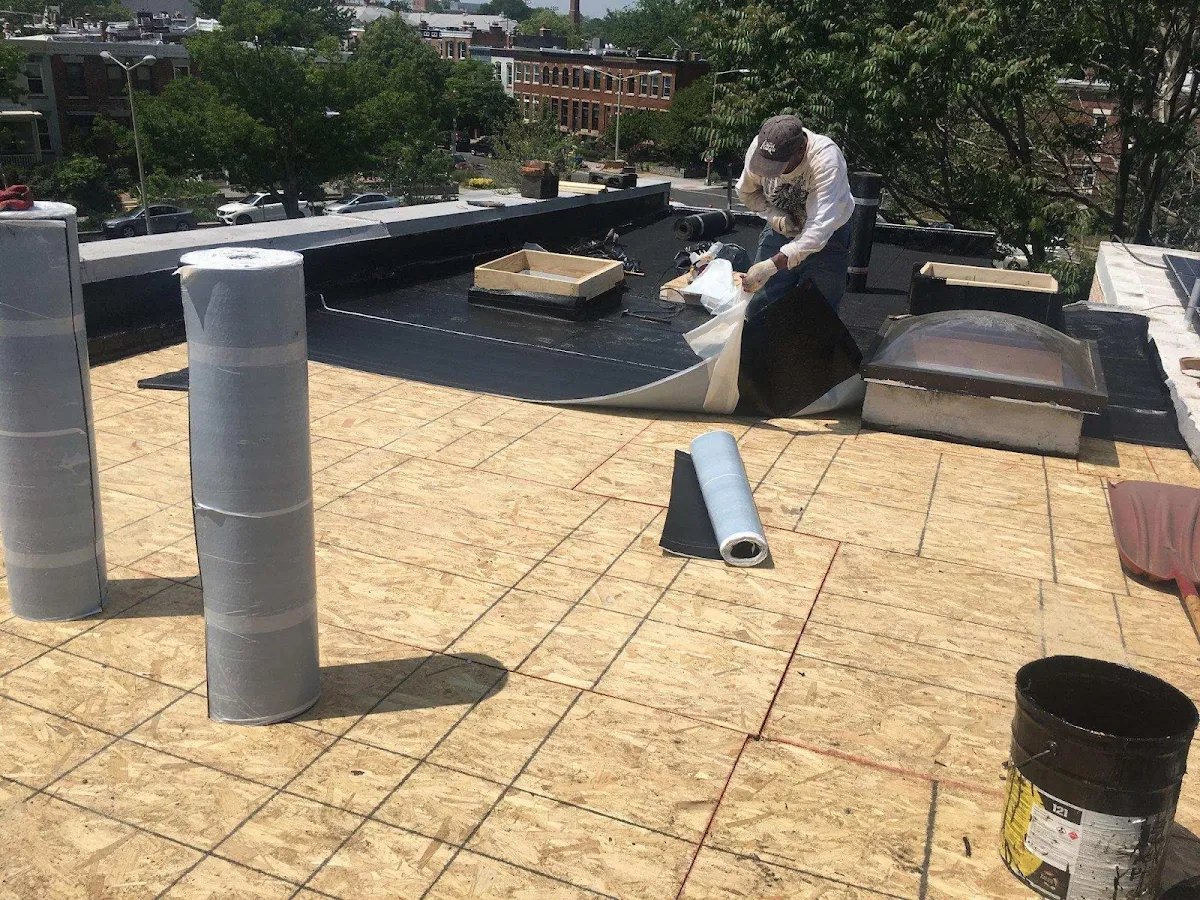
He lays the base sheet over the deck, then applies the cap sheet — torch-applied or cold-adhered modified bitumen, or hot asphalt plies — with seams sealed properly.
Flash Every Wall and Penetration
Every parapet, chimney, skylight curb, and scupper gets flashed and sealed. This is where most leaks start, so it's where Raymond is most careful.
Drainage and Silver Coat
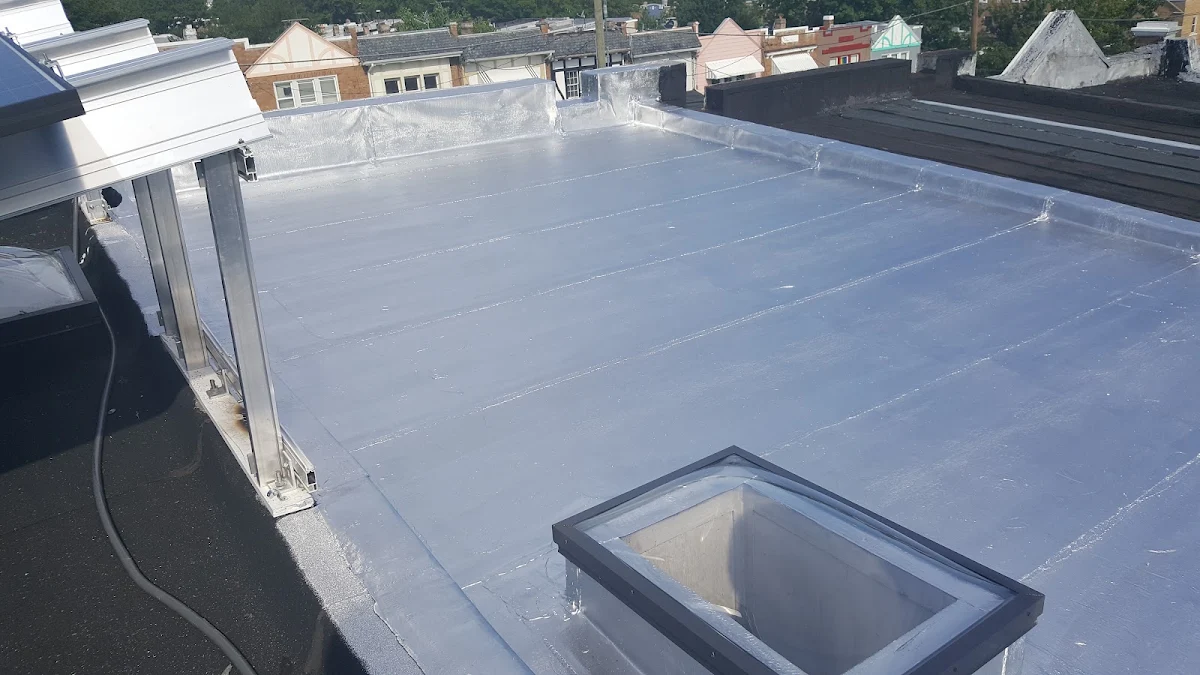
Water has to reach the scuppers and leave the roof. Raymond sets the slope and clears the drainage, then finishes with a reflective silver coat that protects the membrane from the DC sun.
Flat Roof Installation in Progress
Flat Roof Installation FAQ
Serving DC, Prince George's & Montgomery County
Based in Hyattsville, MD — serving these 20 towns within about 20 miles.