Flat Roof Experts
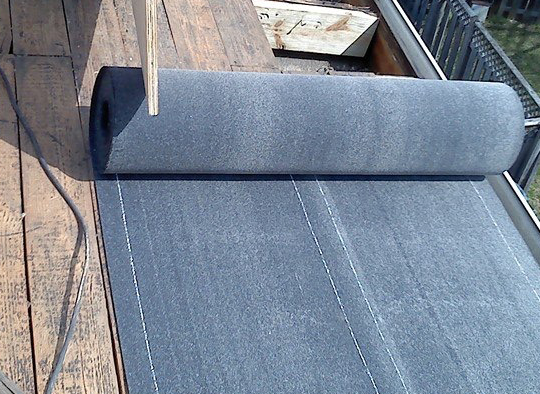
Modified bitumen roll close-up on a flat roof — Flat Roof Experts, Hyattsville MD
Based in Hyattsville, MD — serving DC, Prince George's & Montgomery County

Modified Bitumen Roofing in Hyattsville, MD & DC

The workhorse of DC-area rowhouse roofs. Raymond installs and maintains modified bitumen — base and cap sheets, sealed seams, and the silver coat that takes the heat off.

Modified Bitumen

The Workhorse of DC-Area Rowhouse Roofs

If you walk down a rowhouse block in Capitol Hill, Petworth, Brookland, or Hyattsville and look up, most of the flat roofs you see are modified bitumen. It's the system that took over from older built-up roofs on residential and low-slope buildings because it's tough, flexible through DC's freeze-thaw winters and baking summers, and lasts a long time when it's installed and maintained right.

Modified bitumen is a reinforced, granule-surfaced membrane installed in plies — a base sheet over the deck and a cap sheet on top, typically torch-applied or cold-adhered. The seams are where the system lives or dies: they have to be sealed properly so water can't sneak under the top ply. Raymond has been working with these systems since they became the standard on DC-area roofs, and he knows where the seams fail and how to seal them so they hold.

Then there's the silver. The reflective silver coating on top of the cap sheet isn't decoration — it reflects UV off a roof that sits in direct DC sun all summer, keeps the top floor cooler, and stops the asphalt underneath from drying out and cracking. When that coating wears thin, the cap sheet bakes. Keeping the drains clear and recoating when the silver wears is the simple maintenance that keeps a modified bitumen roof going for years. Raymond tells you when it's time.

FREE ESTIMATE REQUEST

Get an Honest Quote

DON'T IGNORE THESE

Signs You Need Modified Bitumen

01

Flaking Silver Coating

When the reflective coat flakes off, the cap sheet underneath bakes in the sun, dries out, and cracks. A recoat now prevents a much bigger repair later.

02

Open or Lifting Seams

Modified bitumen lives or dies by its seams. A seam that's lifting or separating is an open path for water under the cap sheet.

03

Blistering or Bubbling

Blisters mean moisture is trapped under the membrane. That's a sign the system needs attention, not just a spot patch.

04

Ponding Around Drains

Standing water near a clogged scupper ages modified bitumen fast. Keep the drains clear or the membrane will fail early.

05

The Roof Is Past Mid-Life

A modified bitumen roof well into its service life with any of the signs above is worth an honest inspection — Raymond tells you how much life it has left.

THE OLD-SCHOOL WAY

How Raymond Handles It

1

Inspect the Membrane and Seams

Raymond gets up on the roof and checks the cap sheet, the seams, the silver coating, and the drains — the four things that decide a modified bitumen roof's fate.

2

Honest Recommendation

He tells you whether a seam reseal and a silver recoat will keep it going, or whether the membrane is broadly failed and replacement makes sense.

3

Seal the Seams

If a repair is the answer, Raymond reseals the lifting or open seams properly so water can't get under the cap sheet.

4

Recoat or Replace

A worn silver coat gets a fresh reflective layer. A broadly failed membrane gets a full tear-off and a new modified bitumen system over a sound deck.

5

Clear the Drains

He makes sure the scuppers and downspouts are clear so water leaves the roof — ponding is what ages modified bitumen faster than anything.

THE PROMISE

What Can Wait — and What Can't

Raymond tells you what needs fixing now and what can wait. Here's the honest split for modified bitumen.

Fix It Now

  • An open or lifting seam — water goes straight under the cap sheet.
  • A broadly blistered membrane — trapped moisture means the system has failed.
  • Ponding water that never drains — it will age the membrane fast and find every defect.
  • A soft spot in the deck under a failed section — the wood below is already wet.

Can Wait a While

  • A silver coat that's thinning but the cap sheet is still sound — schedule a recoat in good weather, not an emergency.
  • Minor granule loss on an older cap sheet that's still shedding water with no active leak.
  • Clearing drains that are partly clogged but still draining — important, but not a middle-of-the-night call.
ON THE ROOF

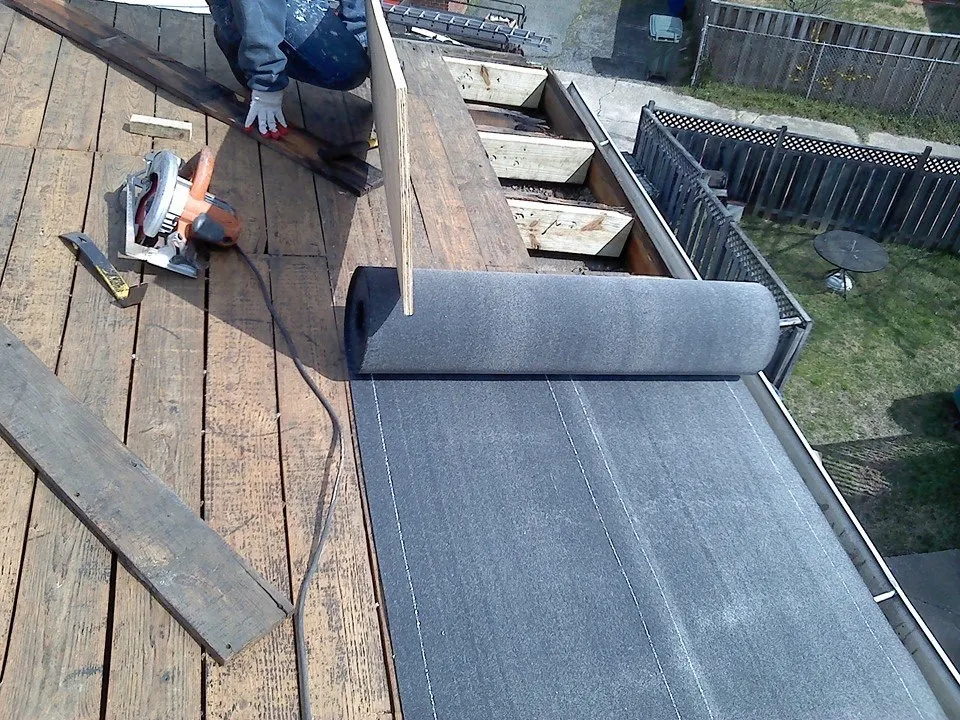
Modified Bitumen in Progress

Modified bitumen roll roofing being laid over new boards — Flat Roof Experts, Hyattsville MD
Cap sheet going down
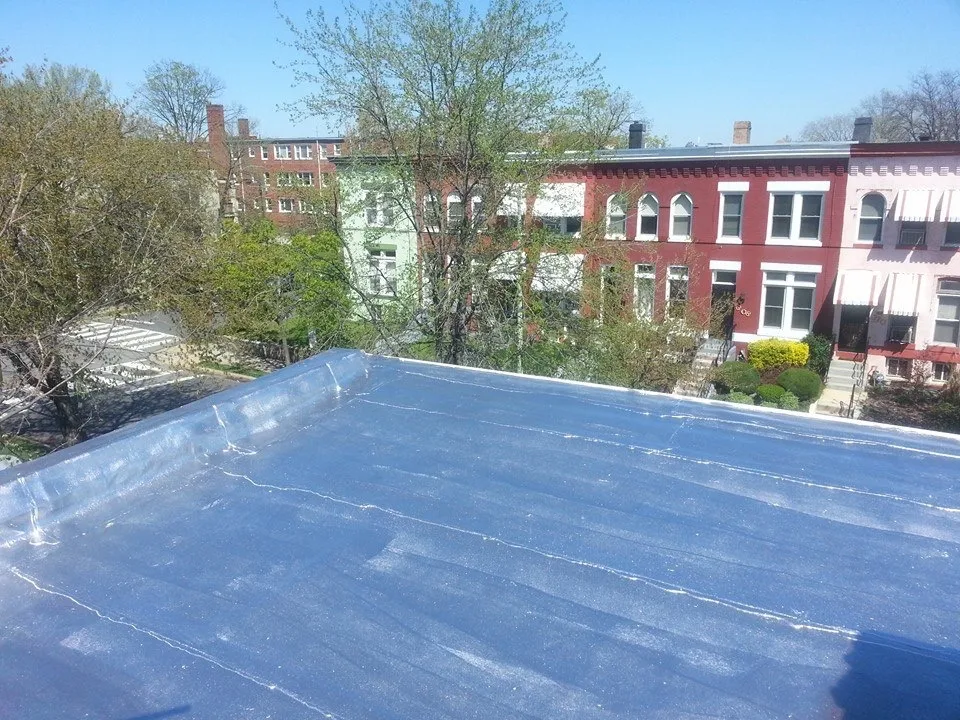
Silver modified bitumen roof over a rowhouse street — Flat Roof Experts, Hyattsville MD
Finished silver roof
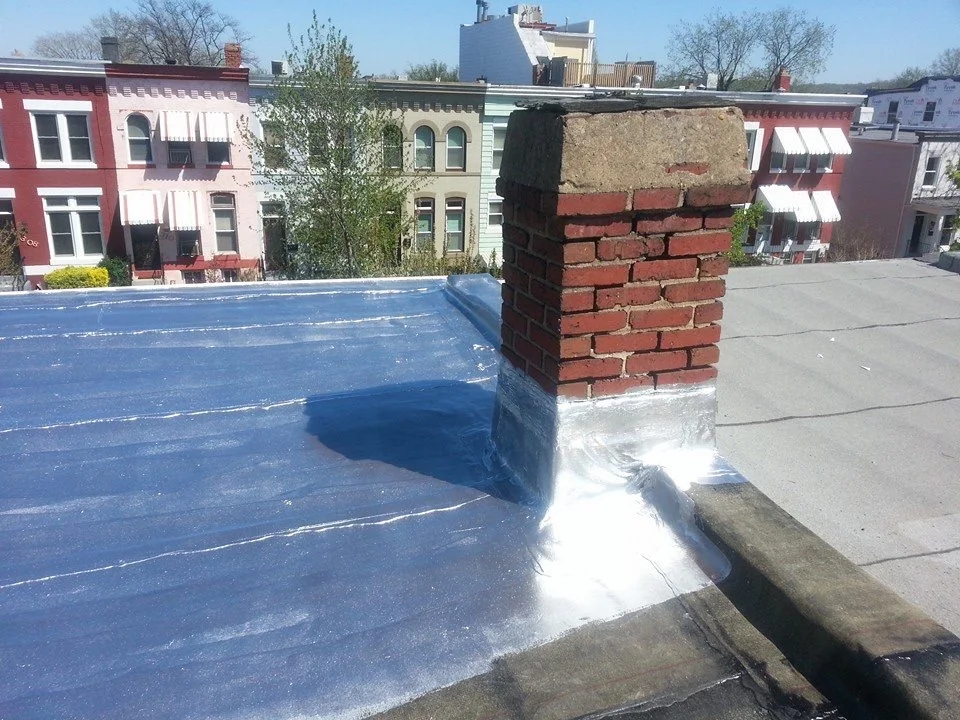
Rowhouse silver roof with brick chimney — Flat Roof Experts, Hyattsville MD
Silver coat in place
FROM A REAL CUSTOMER

What Gene M. Says

"I've known Ray since the early 2000s he's done appropriately 10 +/- roofs for me. Great pricing. Expeditious response always. Stands behind his work 100%. No leaks. Quality long lasting flat roofs. Look nowhere else. Great company Great guy.!!!"

— Gene M.Google review
QUESTIONS ANSWERED

Modified Bitumen FAQ

Modified bitumen is a reinforced, granule-surfaced membrane installed in plies — a base sheet over the deck and a cap sheet on top, typically torch-applied or cold-adhered. It's the most common modern flat roof system on DC rowhouses and low-slope buildings because it's tough and flexible through temperature swings.
The silver coat reflects UV off a roof that sits in direct DC sun all summer, keeps the top floor cooler, and stops the asphalt cap sheet underneath from drying out and cracking. When it wears thin, the membrane bakes. Recoating when the silver wears is the simple step that keeps a modified bitumen roof going for years.
Two things: keep the scuppers and drains clear so water doesn't pond, and recoat the silver when it wears thin. Ponding ages the membrane faster than anything, and a bare cap sheet bakes in the sun. Raymond tells you when it's time for a recoat.
Often a seam reseal and a silver recoat will keep it going. Raymond inspects the cap sheet, the seams, the coating, and the drains, then tells you honestly whether a repair is enough or the membrane is broadly failed and replacement makes sense.
For most rowhouses and homes, modified bitumen is the practical, durable choice. For larger low-slope roofs and buildings that take foot traffic or hold equipment, a hot asphalt built-up roof with multiple plies can make more sense. Raymond recommends the system that fits your building, explained plainly.

Get an Honest Answer About Your Roof

Call Raymond or request a free estimate. He'll tell you what needs fixing now — and what can wait.