Flat Roof Experts
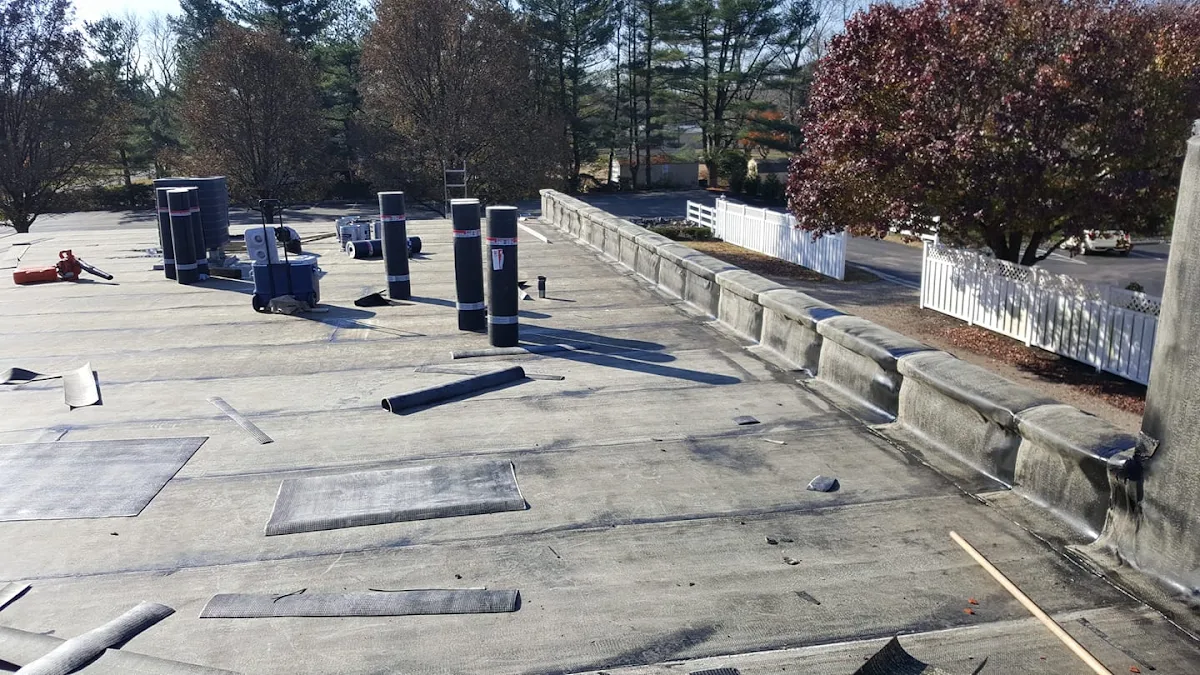
Large low-slope roof mid-job — Flat Roof Experts, Hyattsville MD
Based in Hyattsville, MD — serving DC, Prince George's & Montgomery County

Hot Asphalt (Built-Up) Roofing in Hyattsville, MD

The traditional built-up roof: layers of felt set in hot asphalt. Where it still makes sense, how it compares to modified bitumen, and repairing one vs replacing it.

Hot Asphalt Roofing

The Traditional Built-Up Roof

Before modified bitumen became the standard on rowhouses, the flat roof was a built-up roof — layers of roofing felt set in hot asphalt, topped with gravel or a reflective coating. It's the old-school system, and on the right building it's still an excellent choice. Raymond has been working with hot asphalt built-up roofs since he started roofing in 1981, and he knows them inside out.

Where does hot asphalt still make sense? On larger low-slope roofs, on commercial and older apartment buildings, and on roofs that take foot traffic or hold HVAC equipment. The strength of a built-up roof is its redundancy: multiple plies mean that if one layer develops a minor defect, the layers below keep protecting the building. That's why you still see decades-old built-up roofs on commercial buildings across Prince George's and Montgomery County holding up where a single-ply would have failed.

How does it compare to modified bitumen? In plain terms, modified bitumen — a reinforced cap sheet over a base sheet — is the practical choice for most rowhouses and homes: faster to install, flexible, and durable. Hot asphalt built-up, with its multiple plies, makes more sense on bigger low-slope roofs and buildings that need the extra toughness and redundancy. Raymond explains the trade-offs for your specific building and recommends the one that genuinely fits.

Repairing an existing built-up roof vs replacing it? A lot of older BUR roofs can be repaired — a failed flashing, a worn spot, a split — and keep going, because the multi-ply construction means a defect in the top layer doesn't immediately leak. But when the plies are broadly saturated, the deck is soft, or the roof is well past its service life, a full tear-off and replacement is the honest call. Raymond tells you which one your roof is.

FREE ESTIMATE REQUEST

Get an Honest Quote

DON'T IGNORE THESE

Signs You Need Hot Asphalt Roofing

01

Worn or Bare Spots on the Top Layer

Where the gravel or coating has worn off, the asphalt underneath bakes and cracks. A built-up roof can often be repaired at these spots.

02

Saturated or Soft Plies

If the felt plies are saturated with water and soft underfoot, the system has taken on water broadly. That points toward replacement.

03

Splitting or Alligatoring

Deep cracks that look like alligator skin mean the asphalt has dried and shrunk. Surface alligatoring can be coated; deep splits need more.

04

Failed Flashing at Penetrations

Built-up roofs leak at the edges — parapets, chimneys, scuppers. A failed flashing on an otherwise sound BUR roof is a repair, not a replacement.

05

The Roof Is Old but Dry

An older built-up roof that's still dry with no soft spots may have years left. Raymond inspects and tells you honestly how much life remains.

THE OLD-SCHOOL WAY

How Raymond Handles It

1

Inspect the Plies and Deck

Raymond checks the top layer, the condition of the felt plies underneath, the flashing at every edge and penetration, and whether the deck below is sound.

2

Repair or Replace — Honestly

If the plies are dry and only the top layer or a flashing has failed, a repair keeps it going. If the plies are saturated or the deck is soft, replacement is the honest call.

3

Repair: Patch and Coat

For a repair, Raymond patches the failed spot, reseals the flashing, and recoats the worn area to protect the asphalt underneath.

4

Replace: Tear-Off and Rebuild

For a replacement, he tears off down to a sound deck and rebuilds a hot asphalt built-up system — or recommends modified bitumen if it fits the building better.

5

Stand Behind the Work

Either way, Raymond cleans up and stands behind the work, just as he told you he would in the written quote.

THE PROMISE

What Can Wait — and What Can't

Raymond tells you what needs fixing now and what can wait. Here's the honest split for hot asphalt roofing.

Fix It Now

  • Saturated, soft felt plies — the system has taken on water broadly and needs replacement.
  • A soft deck under a failed section — the wood below is wet and rotted.
  • A split that goes all the way through the plies — water is already past the top layers.
  • Failed flashing at a parapet or scupper on a roof that takes wind-driven rain.

Can Wait a While

  • Surface alligatoring on a dry, sound built-up roof — a protective coat can be scheduled, not rushed.
  • A worn spot where the gravel has thinned but the plies are still dry and intact.
  • Recoating a BUR roof that's aging but has no soft spots or active leaks.
ON THE ROOF

Hot Asphalt Roofing in Progress

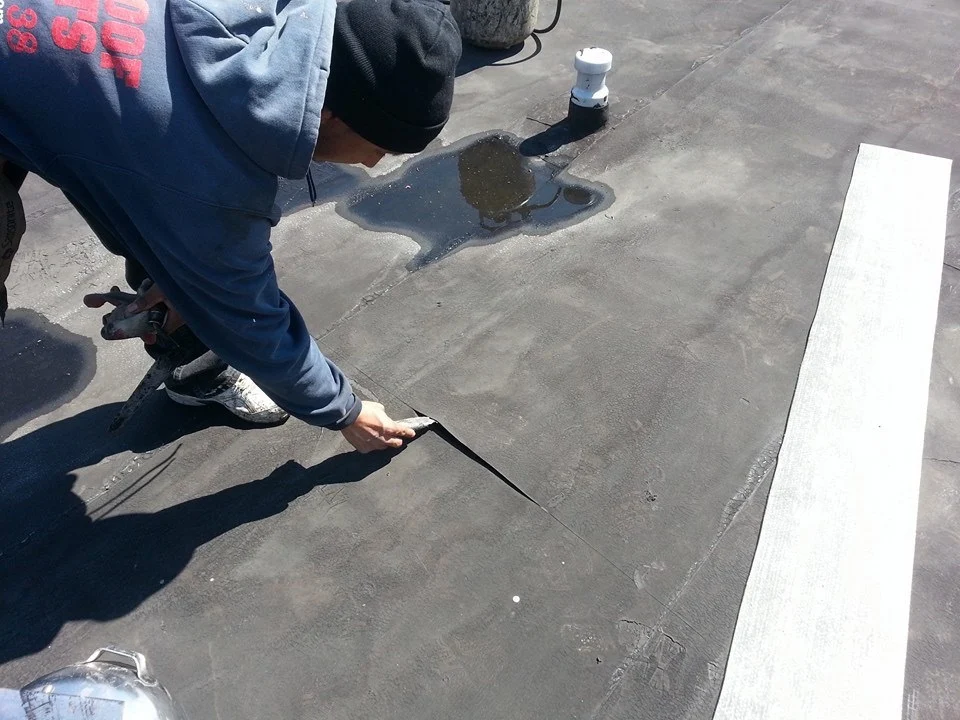
Seam and detail work on a flat roof — Flat Roof Experts, Hyattsville MD
Detail and seam work
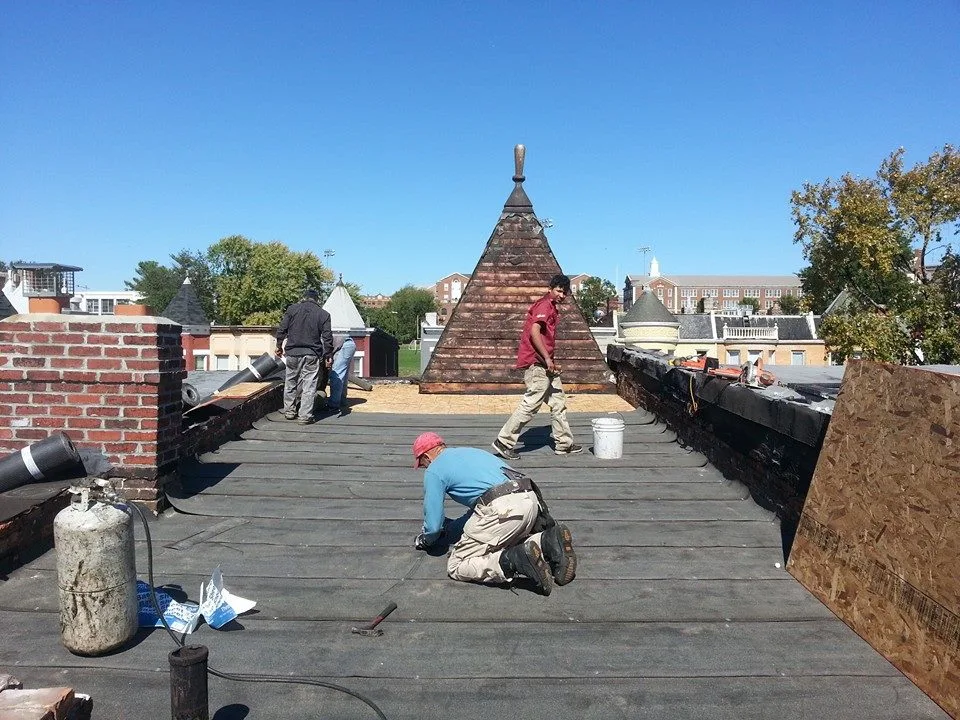
Crew working on a DC rooftop — Flat Roof Experts, Hyattsville MD
Crew on the roof
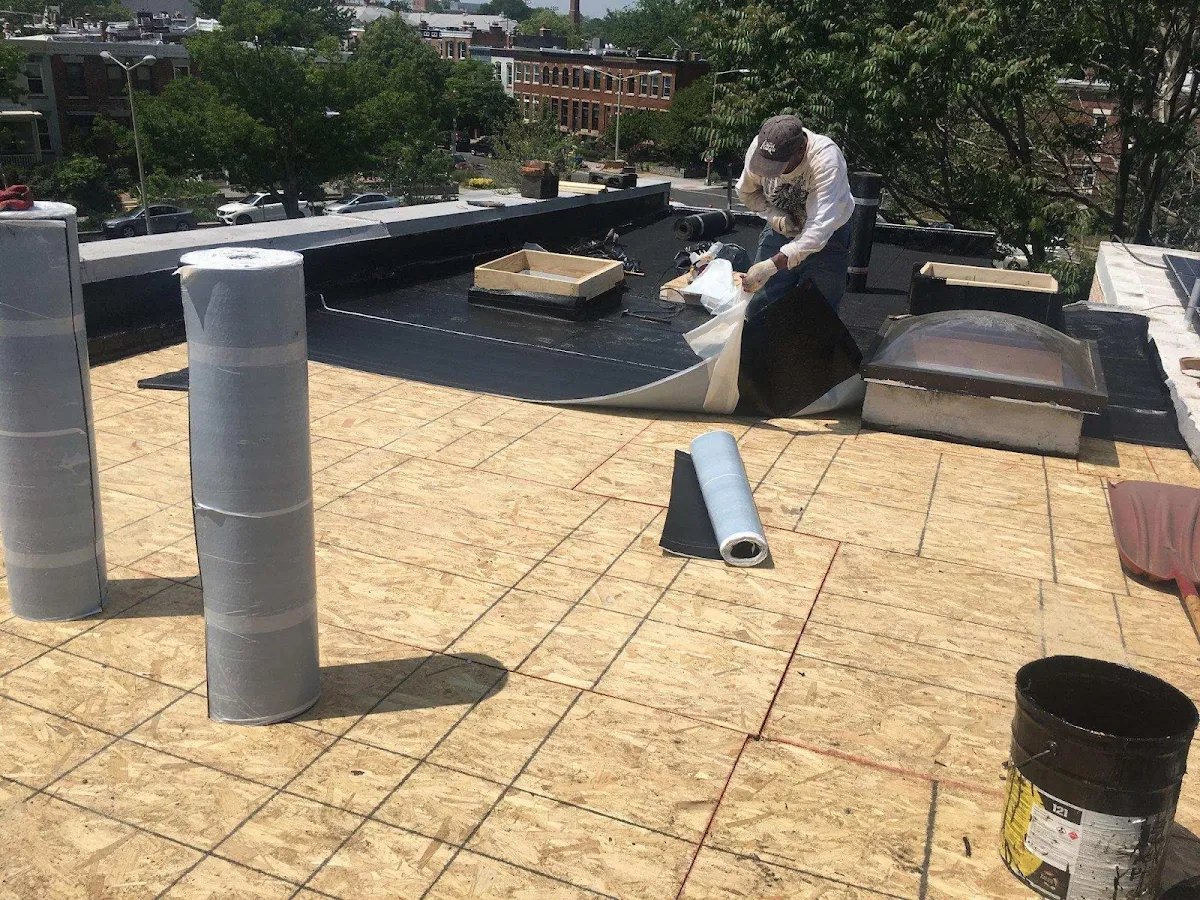
Roofing rolls staged on a new deck — Flat Roof Experts, Hyattsville MD
Materials staged
FROM A REAL CUSTOMER

What Darryl R. Says

"I had 176 sf commercial bldg that needed a flat roof. I called 3 different places, prices were within 5k of each other. Luckily I found Mr Johnson he gave a price and I couldn't pass it up. I'm very satisfied and overjoyed with the job he did. Clean and professional!"

— Darryl R.Google review
QUESTIONS ANSWERED

Hot Asphalt Roofing FAQ

A built-up roof (BUR) layers multiple plies of roofing felt bonded with hot asphalt, topped with gravel or a reflective coating. The multi-ply construction gives it redundancy — if one layer develops a minor defect, the layers below keep protecting the building. It's extremely durable and common on commercial and older apartment buildings.
Hot asphalt built-up roofing makes sense on larger low-slope roofs, commercial and older buildings, and roofs that take foot traffic or hold equipment — where the extra toughness and redundancy of multiple plies pay off. For most rowhouses and homes, modified bitumen is the more practical choice. Raymond recommends the system that fits your building, explained plainly.
Often it can be repaired. Because a built-up roof has multiple plies, a defect in the top layer doesn't immediately leak — so a failed flashing, a worn spot, or a split can often be patched and the roof keeps going. But when the plies are saturated and soft or the deck is rotted, replacement is the honest call. Raymond inspects and tells you which one yours is.
Alligatoring is the deep, crackled pattern that appears when the asphalt top layer dries out and shrinks over years of sun exposure. Surface alligatoring on a dry, sound roof can be coated to protect it. Deep splits that go through the plies need more than a coat — Raymond tells you the difference.
Yes. The multi-ply construction and redundancy of a hot asphalt built-up roof make it a strong choice for commercial low-slope roofs that take foot traffic or hold HVAC equipment. Raymond has installed and maintained built-up roofs on commercial buildings across Prince George's and Montgomery County since 1981.

Get an Honest Answer About Your Roof

Call Raymond or request a free estimate. He'll tell you what needs fixing now — and what can wait.